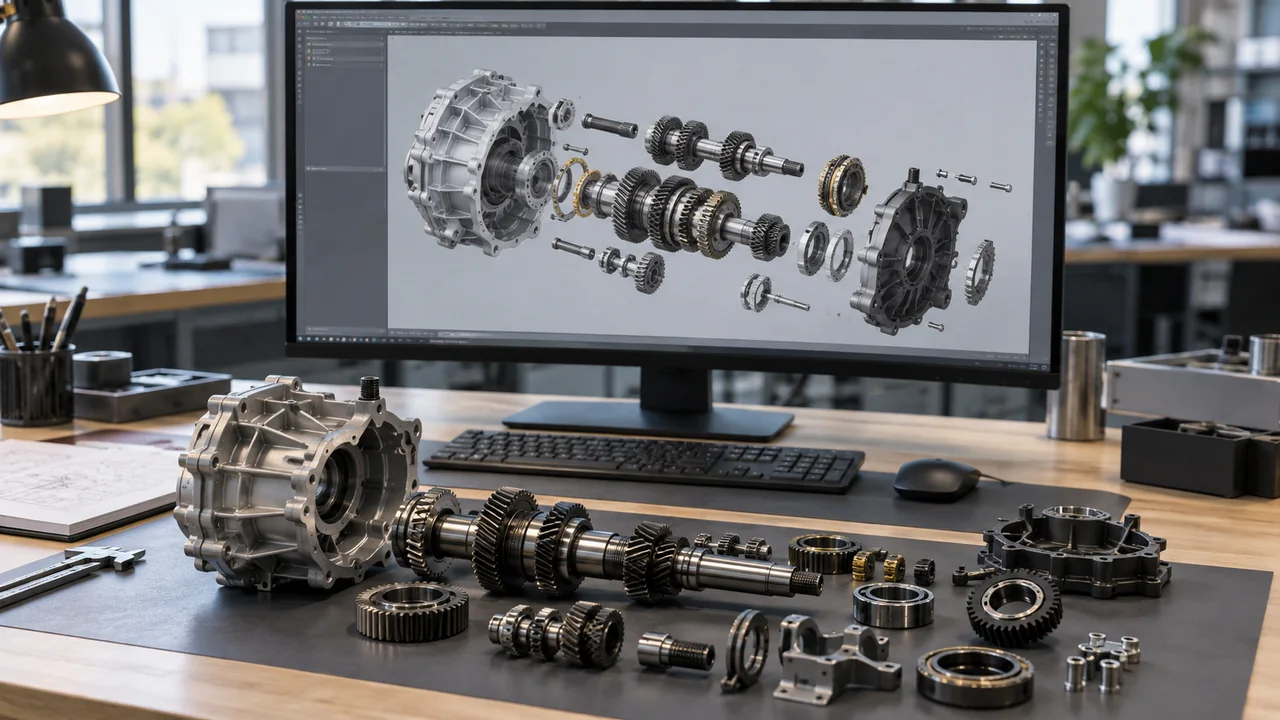
3D Engineering
Product Rendering
Overview
Product Rendering is a professional AIOR service planned around a validated need in 3D Engineering. Discovery defines the objective, delivery type, responsibilities and acceptance criteria; only the required production, review, handover and transition steps enter the written scope. Documentation, quality and security controls for Product Rendering are selected for the output type and risk profile; code or infrastructure processes are not assumed for a non-software delivery. Production methods and tools are selected for the Product Rendering output; cloud, automation or executable software is used only when a validated technical need requires it.
Use Cases
Product Rendering may be considered for product visualisation, technical modelling, prototyping, production preparation and design validation. The exact use case is defined after discovery validates the organisation's goals, user roles, data flows and existing infrastructure. Scope, acceptance criteria, security requirements and operating responsibilities are documented together in the project plan. The proposed solution includes only components justified by validated needs; features unrelated to the organisation's sector, scale or regulatory context are not assumed to be in scope. Required integrations, data ownership and responsible teams are recorded in the discovery output.
Technology & Architecture
The technology and production stack for Product Rendering is selected by output type, performance target, maintenance cost and team capability. Cloud, hybrid, high-availability or disaster-recovery scope is included only where an infrastructure and continuity requirement has been validated.
Benefits
- Comparison of alternatives by scope, cost and resource impact
- Defined APIs and data responsibilities where integration is required
- End-to-end project management with transparent reporting
- Defined acceptance and value targets for Product Rendering
- Performance monitoring and improvement using applicable metrics
- Maintenance and technical support when included in the written service plan
Process
Discovery & Analysis
Business goals, existing systems and constraints are analysed in depth.
Architecture Design
Technical architecture is defined with security, scale and integration needs.
Production & Review
The delivery method, quality controls and review steps are selected for the type of output.
Delivery & Acceptance
The approved output is handed over against acceptance criteria, with documentation, training or support where included in scope.
Why AIOR?
AIOR Technology brings field-engineering experience developed since 2009 to Product Rendering engagements through disciplined discovery, clear documentation and enterprise project management. Software architecture, infrastructure, security, design or operations expertise is included only where the delivery's validated needs require it. Depending on scope, clients receive transparent progress reports, accessible documentation and agreed service targets. Our delivery approach is based on clarifying scope, tracking changes and defining maintenance responsibilities. Ownership, acceptance and subsequent operating responsibilities for the Product Rendering output are stated explicitly in the handover plan.
Compliance & Security
Where Product Rendering processes or hosts data, discovery defines data residency, backup and any required RTO/RPO targets. WCAG, multilingual and mobile requirements are evaluated for user-interface scope, while vendor, licence and open-source controls apply to components actually used. These controls do not by themselves mean that the 3D Engineering service is compliant with a regulation or certified.
Outcome
Expected value for Product Rendering is tracked against the baseline, acceptance criteria and accountable teams defined during discovery. ROI or risk impact is not promised before usage and operating data is available.
FAQ
- What is the typical timeline for Product Rendering?
- The schedule is set after discovery from output volume, review and approval rounds, integrations, site access and third-party dependencies. The proposal states phases, client inputs and date assumptions explicitly.
- Can you integrate with our existing systems?
- Where integration is required, discovery reviews the existing system's APIs, webhooks, data-transfer methods, authentication and permission boundaries. The feasible method, responsibilities and test scenarios are stated in the proposal.
- Do you provide support and maintenance?
- Where maintenance, monitoring, updates or support are needed, scope, service hours, response targets and each party's responsibilities are defined in a separate written service plan.
- What industries do you serve in 3D Engineering?
- Relevant technical capabilities and examples authorised for publication are discussed during discovery. Clients or results covered by confidentiality are not presented as references.
- How does the quoting process work?
- After the initial needs discussion, required discovery, dependencies and client inputs are identified. The written proposal states scope, exclusions, fees, payment, validity and schedule assumptions.
Want a quote on this service?
We review your request and share the scope, appropriate contact channel and response schedule in writing.